
Selecting the wrong paper type or weight for print projects can negatively impact your brand's image and inflate production costs. Whether you are ordering marketing brochures, business cards, or corporate documentation, mastering paper GSM, surface finishes, and grain direction ensures flawless print results every single time.
Frequent Paper Selection Errors & Practical Solutions
Critical Mistakes to Avoid
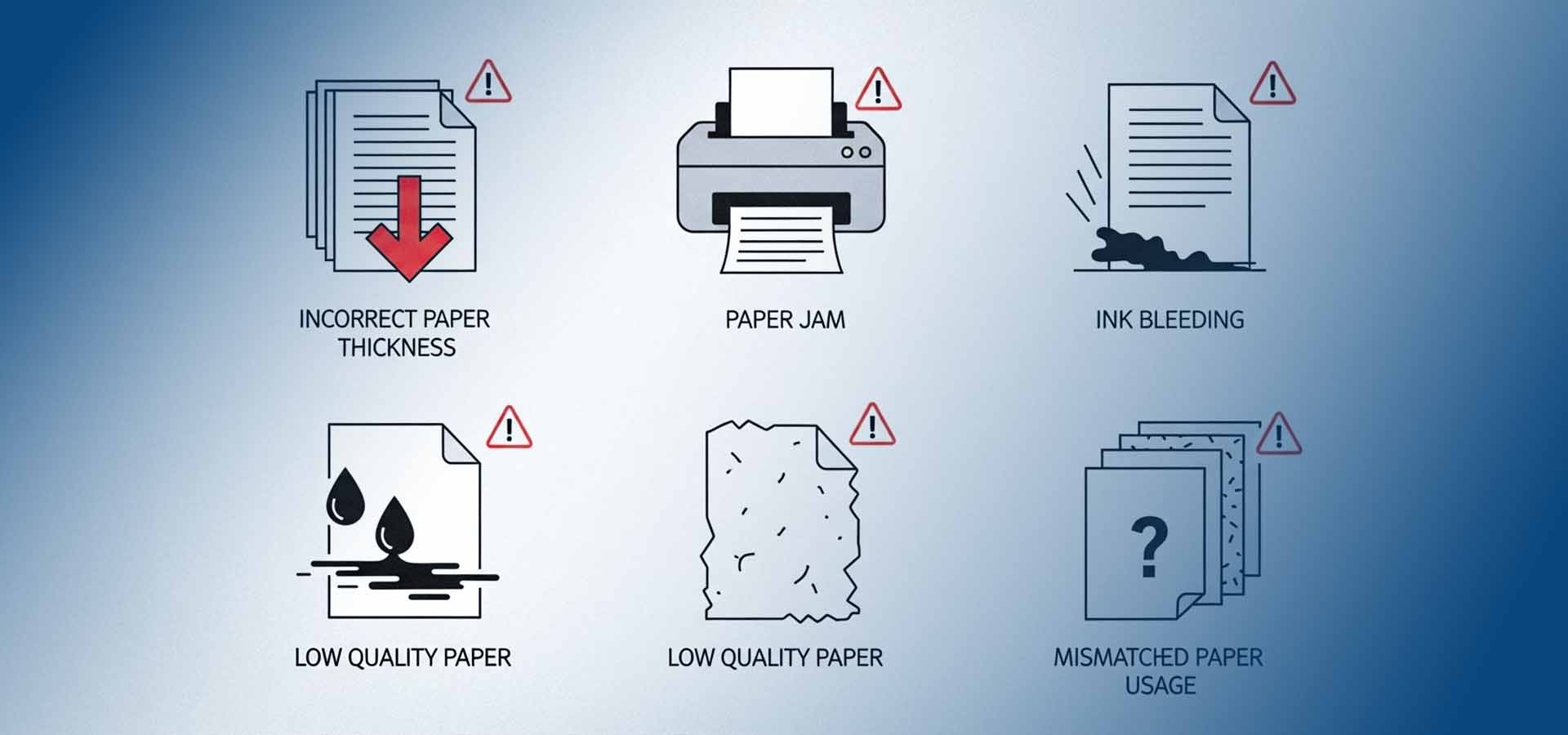
- Choosing inadequate GSM (Paper Thickness): Causes unwanted ink show-through and structural tearing.
- Selecting the wrong finish (Gloss vs. Matte): Can create harsh glare and hamper text legibility under bright ambient lighting.
- Incompatible paper & ink pairings: Using liquid inks on highly absorbent uncoated paper leads to smudging and muted colors.
- Ignoring fiber grain alignment: Results in severe paper cracking and uneven folds along creased edges.
Proactive Printing Guidelines
- Align paper density (GSM) with the functional lifetime of the printed asset (flyers, catalogs, or packaging).
- Opt for coated stock when high-contrast color fidelity and sharp detail are essential.
- Choose uncoated stock for administrative forms that require handwritten notes or ink stamping.
- Always inspect a physical test proof before approving high-volume production runs.
Visual Breakdown of Printing Paper Pitfalls
Paper GSM Weight Reference & Applications
| Paper Weight (GSM) | Recommended Use Cases | Key Features & Benefits |
|---|---|---|
| 70 - 90 GSM | Everyday office memos, inner booklet pages, transactional documents | Lightweight, highly cost-effective, ideal for high-speed desktop printing |
| 120 - 170 GSM | Promotional flyers, trifold brochures, event posters | Balanced durability, rich color absorption, folds smoothly without creasing |
| 200 - 250 GSM | Booklet covers, premium report covers, presentation folders | Substantial weight, luxurious tactile feel, resists frequent handling |
| 300 - 350 GSM | Corporate business cards, product tags, luxury packaging boxes | Maximum stiffness, highly compatible with lamination, foil stamping, and embossing |
Primary Paper Stock Categories Explained
1. Coated Finishes (Glossy & Matte Art Paper)
Engineered with a smooth surface coating that keeps ink on the surface, producing vivid colors and crisp graphic resolution. Perfect for image-heavy brochures, sales catalogs, and magazine covers.
2. Uncoated Finishes (Bond & Woodfree Paper)
Has a porous texture that absorbs ink deeper into the fibers. Offers a classic, natural texture suited for official corporate letterheads, branded envelopes, and writing pads.
Quick Decision Checklist
- Opt for Matte Coated (150–170 GSM): For multi-page corporate booklets to minimize light reflection while keeping images vibrant.
- Opt for 350 GSM Heavy Cardstock + Matte Lamination: For durable business cards that resist moisture and edge wear.
- Opt for Uncoated Offset (80–100 GSM): For official stationery, invoice pads, and administrative paperwork.
Need Expert Advice for Your Next Print Job?
Contact our technical team to request paper swatch samples and receive personalized advice on selecting the right stock for your budget.