
Extreme pavement temperatures during the summer months place intense mechanical stress on automobile tyres. The combination of intense ambient heat and high-speed highway friction causes internal air expansion and softens the rubber structure. Maintaining strict cold inflation protocols, respecting load limits, and inspecting sidewall integrity ensures optimum handling and prevents catastrophic tyre failures.
Understanding Thermal Degradation in Vehicle Tyres
High Heat & Over-Inflation Hazards
- Spontaneous Pressure Rises: Air expands naturally inside the tyre carcass as operating temperatures climb.
- Crown Tread Wear: Excessive pressure crowns the contact patch, accelerating wear along the center ribs.
- Casing Fatigue: Softened rubber compounds become increasingly vulnerable to sidewall impact damage and bubbles.
Critical Driving Habits to Avoid
- Bleeding Hot Tyres: Deflating tyres while they are hot leaves them severely under-inflated once cooled.
- Operating Below Target PSI: Low tyre pressure causes severe sidewall flexing, creating intense friction heat.
- Exceeding Vehicle Payload Capacities: Overloading strains internal steel cord belts under high temperatures.
Summer Pre-Trip Tyre Inspection Matrix
| Inspection Metric | Recommended Procedure | Safety Objective |
|---|---|---|
| Pressure Verification | Check in the morning before the vehicle is driven (Cold PSI) | Ensure exact compliance with manufacturer placard standards |
| Sidewall Examination | Inspect for blisters, bulges, cuts, or weather cracking | Prevent sudden high-speed carcass blowouts on highways |
| Tread Caliper Depth | Maintain a minimum depth above 2.5 mm for summer touring | Preserve stopping power and stability in sudden rain showers |
| Spare Tyre Health | Check inflation level and valve condition monthly | Guarantee emergency reliability during long highway trips |
Essential Guidelines for High-Temperature Cruising
1. Adhere Strictly to the Driver Door Placard Specifications
Always calibrate your tyres to the pressure indicated on the vehicle's B-pillar information sticker, not the maximum PSI stamped on the tyre sidewall. Never release pressure from hot tyres during road trip rest stops.
2. Manage Highway Speed and Vehicle Weight
Thermal accumulation spikes exponentially when operating heavy payloads at sustained high speeds. Keeping within legal speed limits helps dissipate heat and safeguards internal belts.
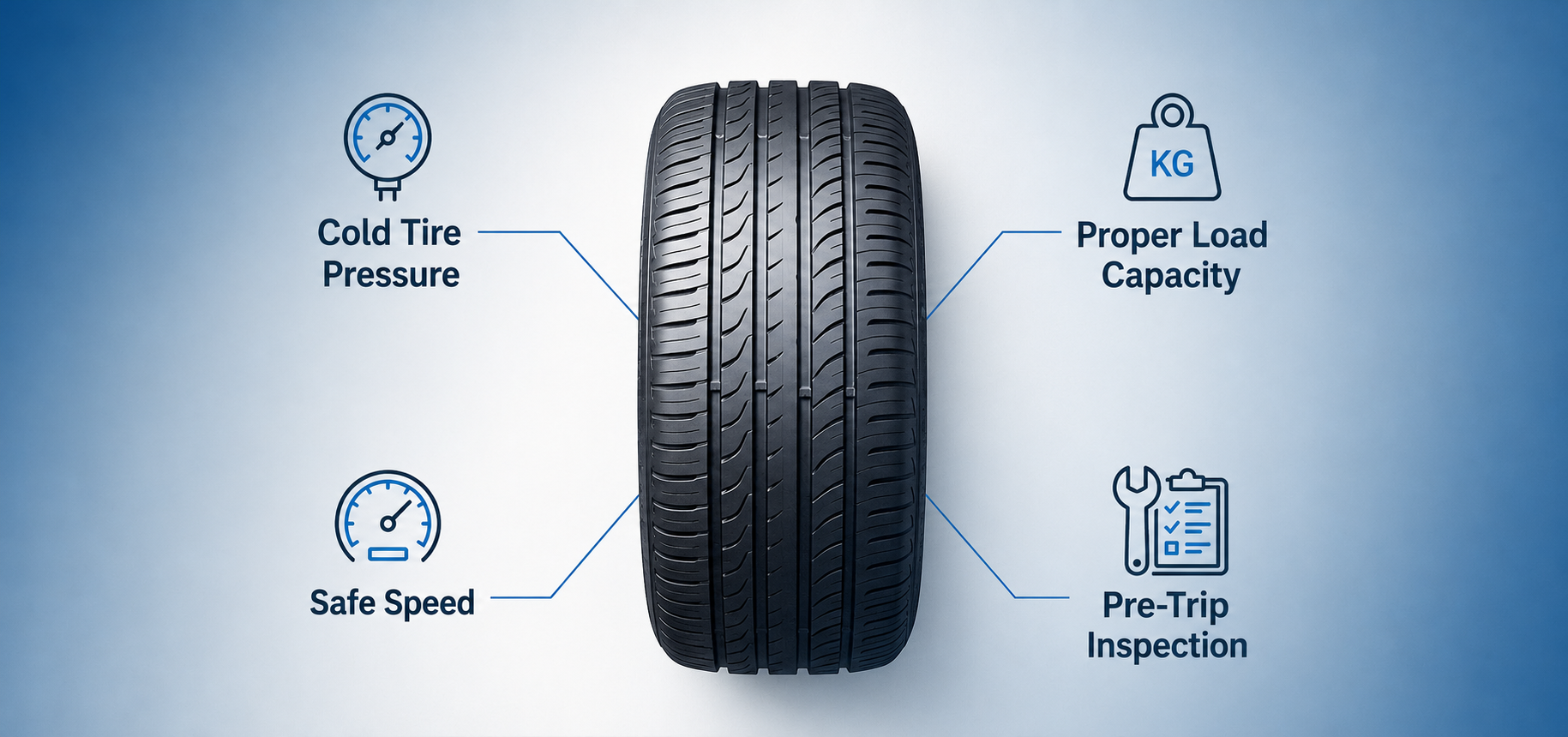
Summer Tyre Safety & Heat Protection Infographic
Pre-Departure Driver Checklist
- Check cold pressure on all four road wheels and the spare tyre before traveling.
- Verify wheel balancing and alignment to ensure balanced heat dissipation across the tread.
- Seek shaded parking spaces whenever possible to minimize direct UV exposure on rubber polymers.
Planning a Long Summer Journey? Let Us Inspect Your Tyres
Visit our technical service center for a comprehensive multi-point tyre inspection covering cold pressure, tread wear, and structural safety.