Repair or Replace Your Tyre? Key Safety Standards Explained
A punctured tyre doesn't always mean buying a replacement immediately. However, driving on a compromised tyre can be dangerous. This safety guide walks you through **puncture size limits, location restrictions, and critical indicators** to help you make a safe, cost-effective choice.
Evaluating Puncture Damage: Repair vs. Replace
When Repairing Is Safe
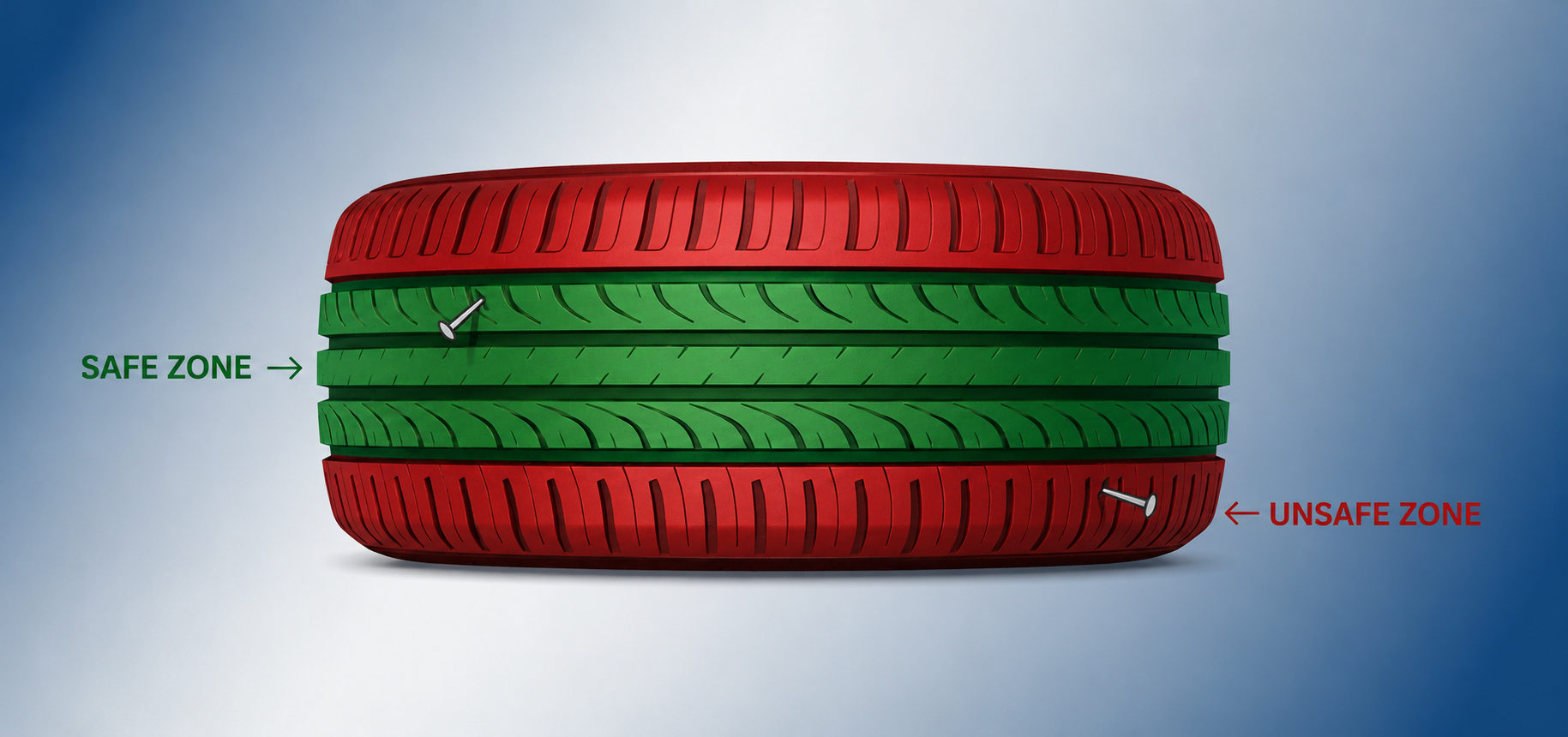
- The puncture occurs strictly within the central tread zone.
- The hole or puncture diameter is 6 mm (1/4 inch) or smaller.
- The tyre was not driven flat or with extremely low pressure.
- Proper internal plug-and-patch repair techniques are applied.
When Replacement Is Required
- The puncture or tear is located on the sidewall or outer shoulder.
- The damaged area exceeds 6 mm in diameter or shows longitudinal tearing.
- Visible sidewall bulging, rubber separation, or exposed steel belts.
- The tyre has existing repairs nearby or is worn below legal tread depth.
Quick Comparison Table
| Assessment Factor | Tyre Puncture Repair | Tyre Replacement |
|---|---|---|
| Permissible Location | Central tread surface only | Any region (especially sidewall & shoulder) |
| Maximum Hole Size | Up to 6 mm | Greater than 6 mm or cuts/slashes |
| Highway Speed Safety | Fully safe when professionally repaired | 100% optimum safety with new rubber |
| Tread Lifespan Impact | Preserves remaining tread wear life | Resets full tread lifespan and performance |
| Upfront Cost | Economical & budget-friendly | Full replacement price |
Understanding Critical Tyre Zones
1. The Repairable Central Tread
The central crown area contains heavy steel belts that provide structural strength. Small punctures caused by screws or nails in this zone can be sealed safely without compromising structural integrity.
2. The Unrepairable Sidewall & Shoulder Zone
The sidewall flexing continuously absorbs road shocks and supports vehicle load. Applying repairs to the sidewall or outer shoulder creates a major risk of sudden air loss or high-speed blowouts.
Professional vs Temporary Fixes
Not all puncture solutions are built equal:
- External String Plugs: Strictly a quick emergency fix to reach the nearest shop. Not recommended for long-distance or highway driving.
- Internal Combination Patch & Plug: The industry standard repair method. The tyre is dismounted, inspected internally, and sealed from the inside to block moisture and preserve structural strength.
Decision Checklist
- Proceed with Repair: If damage is a simple nail hole in the central tread and the inner liner shows no signs of heat damage or run-flat wear.
- Opt for Replacement: If puncture location is near the edge/sidewall, or if the tyre was driven without pressure.
Dangerous Pitfalls to Avoid
- Relying on temporary push-plugs as permanent solutions for fast driving.
- Attempting to repair tyres that are already worn near or past the tread wear indicators (1.6 mm).
- Skipping internal inspection, which hides internal cord damage caused by underinflated driving.
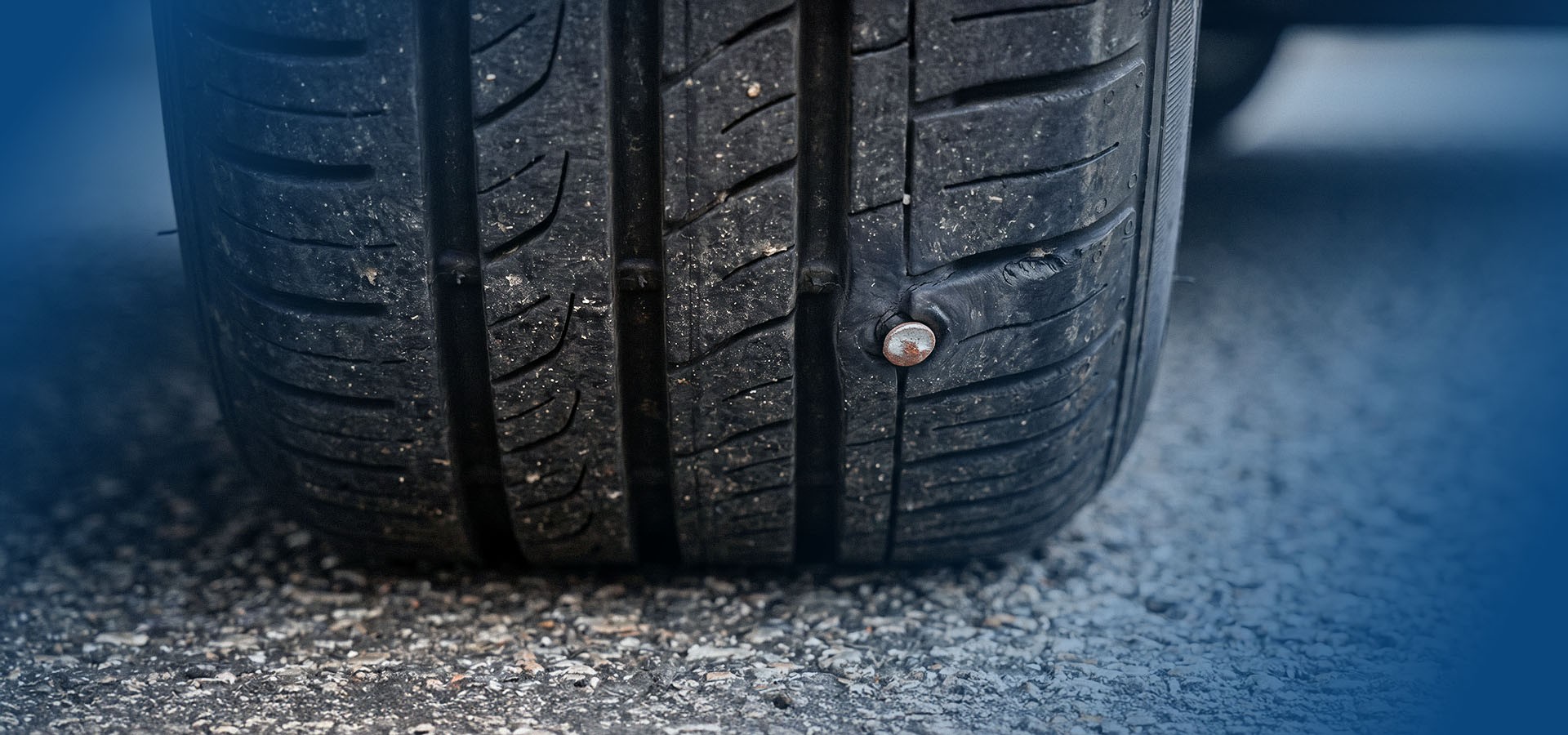
Visualizing Safe Repair Zones
Need an Expert Tyre Inspection?
Visit our service facility for a complete internal and external assessment. We will help you choose the safest and most economical option for your vehicle.