Noticing a persistent tremor or wobble in your steering wheel while driving? Correctly reading the symptoms based on speed ranges prevents costly suspension repairs and premature tread wear. This troubleshooting guide helps you pinpoint whether your vehicle requires wheel rebalancing, wheel realignment, or alloy rim repair.
Symptom Breakdown: What Is Causing the Shimmer?
Signs of Wheel Imbalance (Balancing)
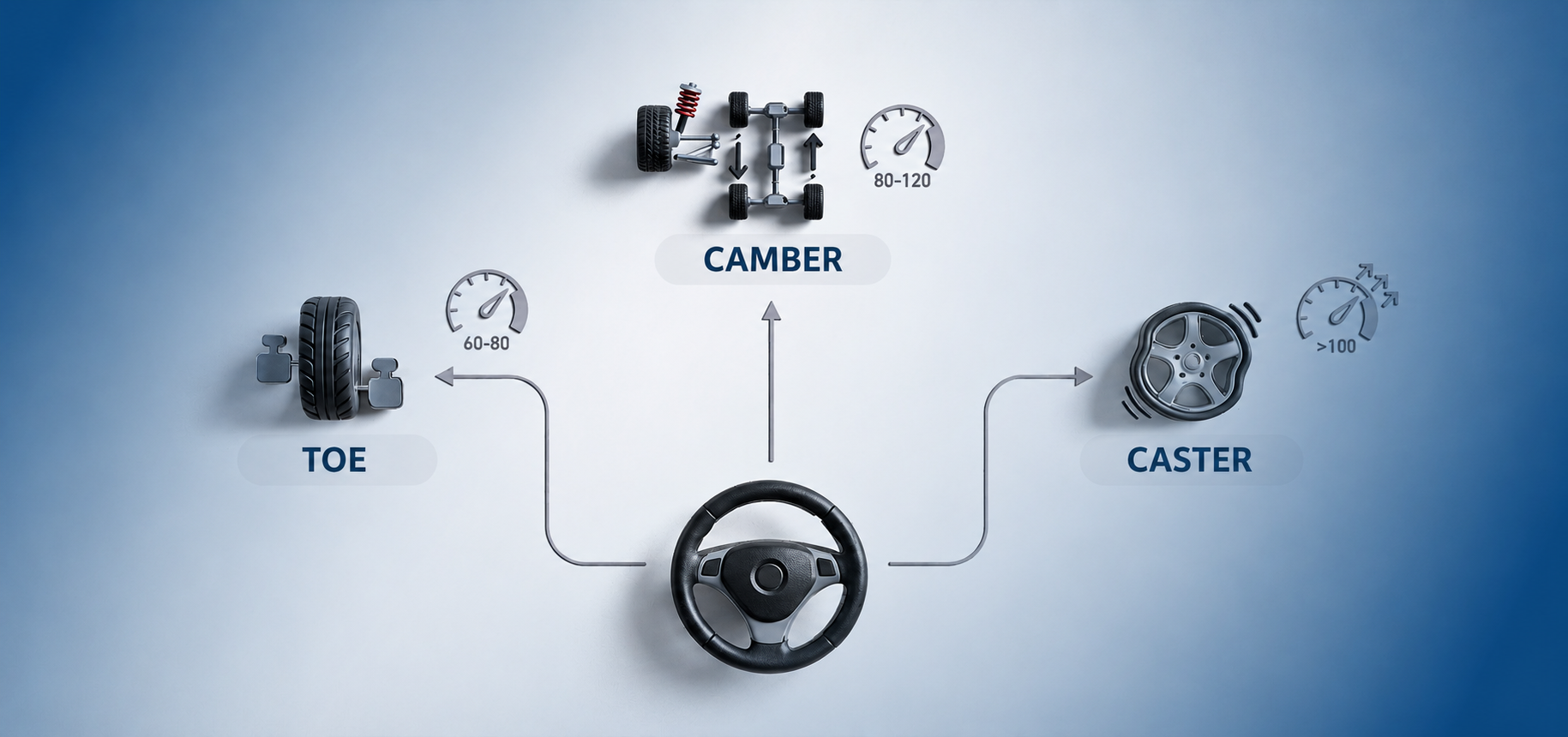
- Vibration occurs within a **specific speed window (typically 80–120 km/h)** and stabilizes at higher speeds.
- Shaking resonates through the cabin floorboards and seats alongside the steering wheel.
- Localized weight unevenness across the tyre and wheel rim circumference.
- Patchy, scalloped, or irregular tread wear spots on the tyre surface.
Signs of Misalignment or Rim Distortion (Alignment/Rim)
- Vehicle constantly veers or pulls toward one side when releasing the wheel on a flat road.
- Continuous wobble that scales up in severity as vehicle speed increases.
- Steering shudder felt specifically when **depressing the brake pedal** (indicates warped rotors).
- Physical dents, flat spots, or bends along the alloy rim lip caused by road hazards.
Diagnostic Matrix: Symptoms & Corrective Actions
| Observed Symptom | Primary Mechanical Cause | Recommended Technical Solution |
|---|---|---|
| Shimmer localized between 80–120 km/h | Wheel weight imbalance (lost balance weights) | Perform dynamic wheel balancing for front and rear wheels |
| Vehicle pulling accompanied by shoulder wear | Misaligned wheel geometry (Toe/Camber angles) | Execute a computerized 4-wheel alignment service |
| Constant shaking across all speeds & harsh rides | Bent wheel rim or internal tyre belt damage | Straighten distorted rim or replace damaged tyre stock |
| Steering wheel shudder during braking | Uneven or warped brake discs (rotors) | Resurface brake rotors or replace discs alongside pads |
Wheel Balancing vs. Wheel Alignment: The Technical Difference
1. Wheel Balancing
Corrects uneven weight distribution across the wheel assembly by attaching precision counterweights. Proper balancing prevents high-speed vibration and protects struts, shocks, and wheel bearings from fatigue.
2. Wheel Alignment
Adjusts the suspension angles to ensure the tyres travel parallel to each other and perpendicular to the road according to OEM specifications. Proper alignment eliminates vehicle drift and prevents accelerated edge wear.
Speed-Based Assessment Checklist
- If shaking is isolated between 80-120 km/h: Clean debris from the rims and schedule a **wheel rebalancing**.
- If the car drifts and displays uneven tread wear: Have a technician inspect **wheel alignment angles and ball joints**.
- If you recently impacted a deep pothole or curb: Inspect the **inner rim lip** for hidden cracks or runout distortions.
Critical Errors That Worsen Wheel Vibration
- Conducting balancing or alignment services without checking for correct inflation pressure first.
- Overlooking inner rim inspection, leaving hairline cracks or subtle bends undetected.
- Ignoring persistent steering vibration, which accelerates wear on tie-rod ends, rack Bushings, and axle joints.
Testing Wheel Equilibrium on Dynamic Balancers
Struggling with Steering Wheel Shake? Let Us Diagnose It
Visit our service center for a thorough inspection of your wheels, tyres, and steering geometry using modern diagnostic tools to restore driving smoothness.