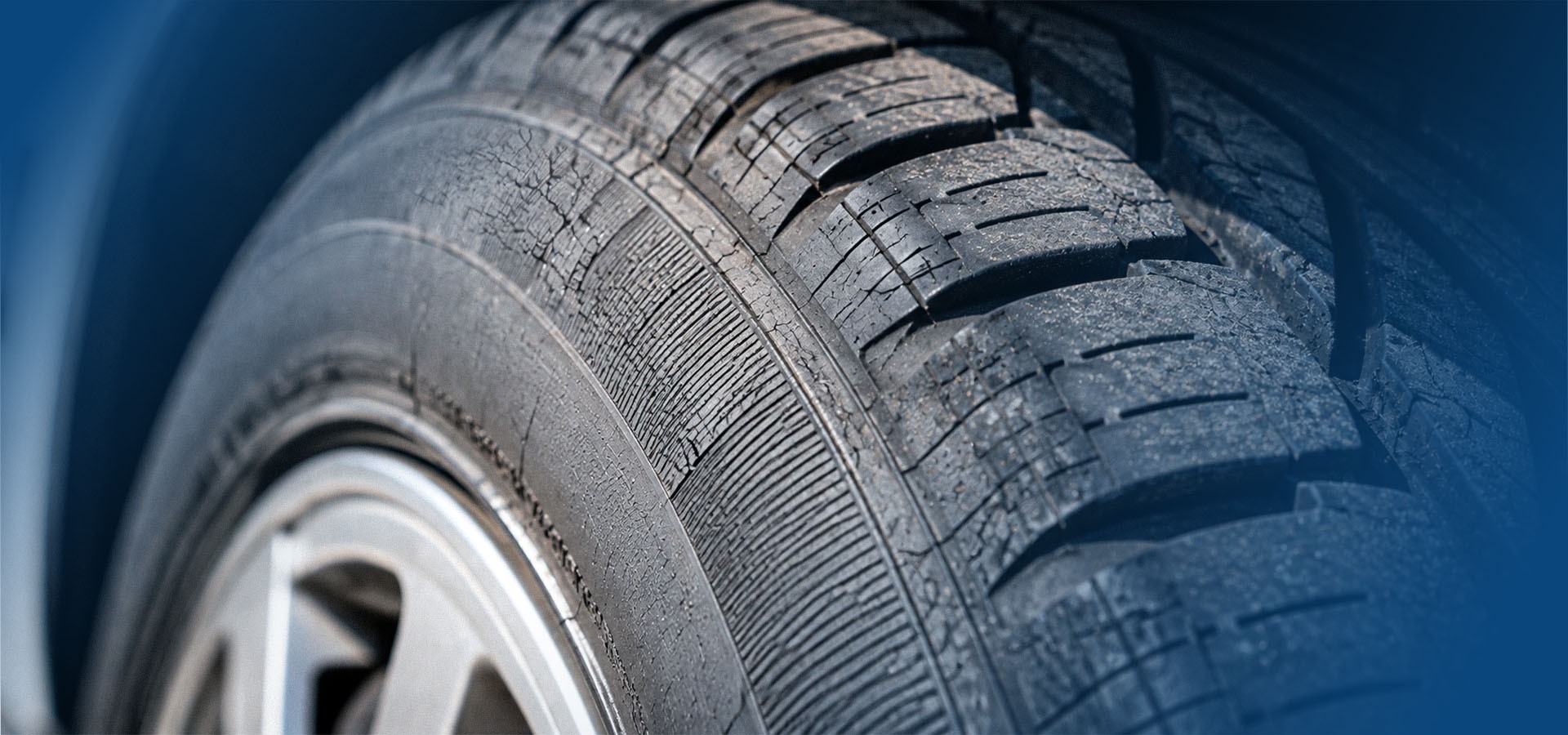
Adequate tread depth alone does not guarantee that a tyre remains roadworthy. Over time, rubber polymers undergo natural oxidation and thermal degradation, causing the carcass to become brittle and lose elasticity. Understanding chronological tyre ageing, interpreting DOT manufacture stamps, and recognizing dry rot fissures are critical steps to prevent sudden carcass delamination and high-speed failures.
Primary Symptoms of Chronological Tyre Ageing
1. Compound Hardening & Surface Dry Rot
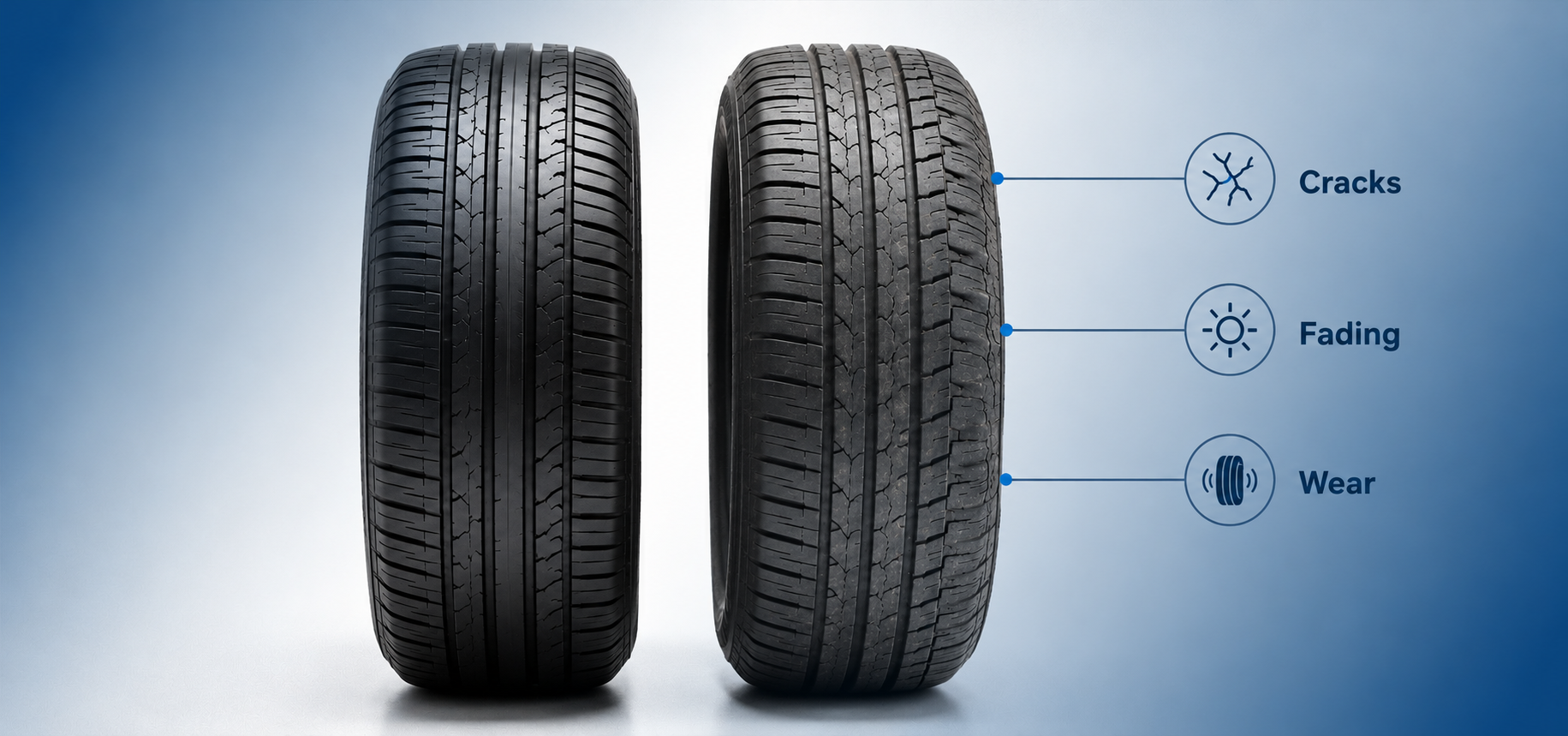
- Sidewall Micro-Fissures: Fine cracking caused by ozone exposure and the depletion of protective anti-ageing waxes.
- Tread Hardening: Loss of compound elasticity leads to reduced friction coefficient and longer braking distances.
- Chipping & Flaking: Brittle rubber edges tear away under moderate cornering loads.
2. Structural Ply Separation & Bulges
- Sidewall Bulges / Bubbles: Ruptured interior cord plies that drastically increase blowout hazards.
- Belt Separation Vibrations: High-speed steering vibrations resulting from internal steel belt delamination.
- Operational Life Over 5–6 Years: Significant decline in emergency wet grip and handling responsiveness.
Comparison Matrix: Roadworthy vs. Age-Compromised Tyres
| Inspection Attribute | Safe & Compliant Tyre | Aged / Compromised Tyre |
|---|---|---|
| Manufacturing Age (DOT) | Under 5 years from production date | Exceeds 5–6 years (mandatory renewal at 10) |
| Rubber Compound Feel | Supple, elastic, and absorbs road vibration | Hardened, chalky, and prone to surface cracking |
| Sidewall Condition | Smooth, uniform, and free of defects | Micro-cracking networks or localized bulges |
| Wet Road Braking Grip | Short stopping distance and responsive bite | Extended stopping distance and increased skid risk |
Decoding the DOT Date Code on Your Tyres
1. Reading the 4-Digit Stamp
Locate the DOT marking on the tyre sidewall, followed by an alphanumeric string ending in a 4-digit code inside an oval window. The first two digits represent the manufacturing week, and the final two digits indicate the production year (e.g., 1521 designates the 15th week of 2021).
2. Mandatory Replacement Timeline
Tyre manufacturers recommend annual professional inspections once tyres reach 5 years of service. Regardless of remaining tread depth, tyres should be replaced after 6 to 10 years due to internal chemical oxidation.
DOT Code Decoding & Ageing Indicators Infographic
Routine Pre-Drive Inspection Checklist
- Check the Spare Tyre: Chemical oxidation occurs continuously even while stored unused in the vehicle trunk.
- Avoid Harsh Chemical Cleaners: Petroleum-based dressings strip protective waxes from outer rubber plies.
- Replace Bulged Tyres Immediately: Any sidewall bubble indicates internal cord failure and requires immediate replacement.
Unsure About the Age and Safety of Your Tyres?
Visit our service center today for a professional inspection of compound elasticity, sidewall integrity, and DOT verification.