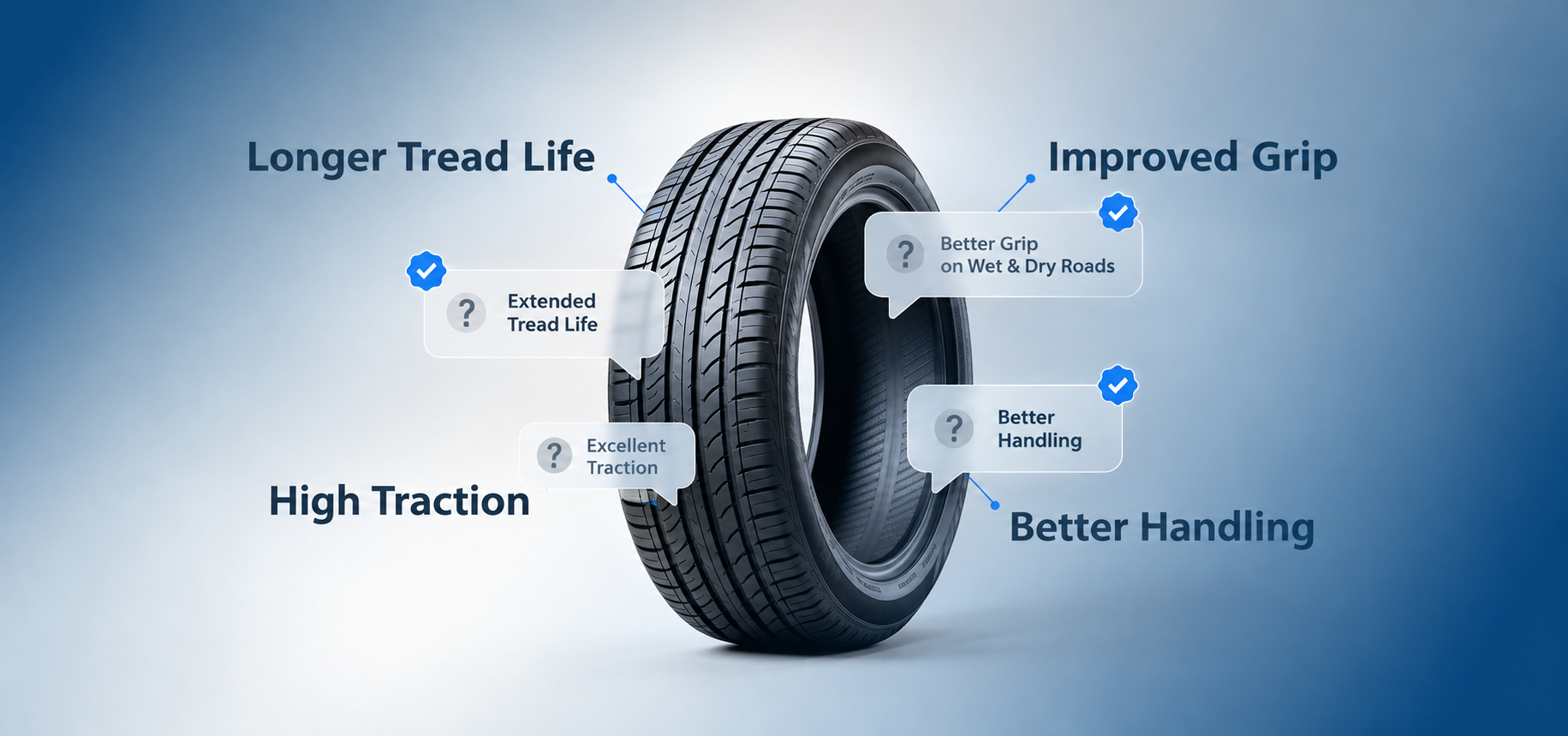
A large segment of drivers continues to guide their maintenance routines using persistent myths and obsolete automotive advice. In reality, these unverified assumptions accelerate tread wear, impair braking dynamics, and drastically increase blowout risks at highway speeds. Tyres serve as the sole physical link between your vehicle and the pavement; grounding your maintenance habits in certified engineering principles protects your investment and ensures maximum road safety.
Deconstructing Common Tyre Myths: Engineering Facts vs. Misconceptions
Pressure Targets, Tread Indicators & Thermal Myths
- The Common Myth: The "Max PSI" figure embossed on the sidewall indicates recommended daily operating pressure.
The Verified Fact: This number represents maximum structural inflation limit; the true vehicle-specific setting is found on the driver-side door jamb placard. - The Common Myth: Visible tread depth alone proves an older tyre remains completely safe.
The Verified Fact: Rubber polymers oxidize and harden over time; tyres should be retired after 5 to 6 years regardless of remaining tread depth. - The Common Myth: Bleeding air from tyres during hot summer weather protects against blowouts.
The Verified Fact: Under-inflating creates severe sidewall deflection, generating dangerous internal friction heat that triggers casing failures.
Repair Protocols, Placement & Sensor Misunderstandings
- The Common Myth: Inserting an external string plug provides a permanent, reliable puncture repair.
The Verified Fact: String plugs are temporary road repairs; certified permanent repair requires demounting the tyre to apply an internal patch-plug combo. - The Common Myth: A new pair of tyres should always be mounted on the front steering axle.
The Verified Fact: Tyre manufacturers recommend mounting newer tyres on the rear axle to prevent sudden oversteer and loss of directional stability on wet roads. - The Common Myth: Electronic TPMS sensors eliminate the necessity for routine manual pressure checks.
The Verified Fact: Most TPMS indicators illuminate only after pressure drops by 20%–25%, well past the point where handling and fuel efficiency are impaired.
Comparative Matrix: Prevailing Myths vs. Engineering Realities
| Maintenance Parameter | Common Assumption (Myth) | Certified Technical Standard (Fact) |
|---|---|---|
| Operational Air Calibration | Inflating to the number stamped on the tyre sidewall | Adhering to the vehicle door frame specification placard |
| High-Temperature Operation | Lowering inflation to offset thermal expansion | Maintaining calibrated cold PSI to avoid flex-induced overheating |
| New Replacement Placement | Mounting the freshest pair on the front axle | Mounting the freshest pair on the rear axle for vehicle stability |
| Sidewall Puncture Repair | Repairing minor punctures situated along the sidewall | Never repairing sidewalls; immediate replacement is mandatory |
| Retirement Timeline | Replacing tyres solely when mileage or tread is exhausted | Factoring chronological age (DOT code) alongside physical wear |
Preventive Habits to Maximize Tyre Longevity & Performance
1. Cold Pressure Checks at Regular Intervals
Calibrate inflation pressures first thing in the morning before driving more than a couple of kilometers. Highway driving heats the internal air chamber, temporarily elevating pressure readings by 4 to 6 PSI and masking underlying under-inflation.
2. Periodic Tyre Rotation Schedules
Rotate tyres between axles every 8,000 to 10,000 km to evenly balance wear across drive and steer positions, preserving balanced handling and extending usable tread life.
Tyre Maintenance Myths vs. Engineering Facts Infographic
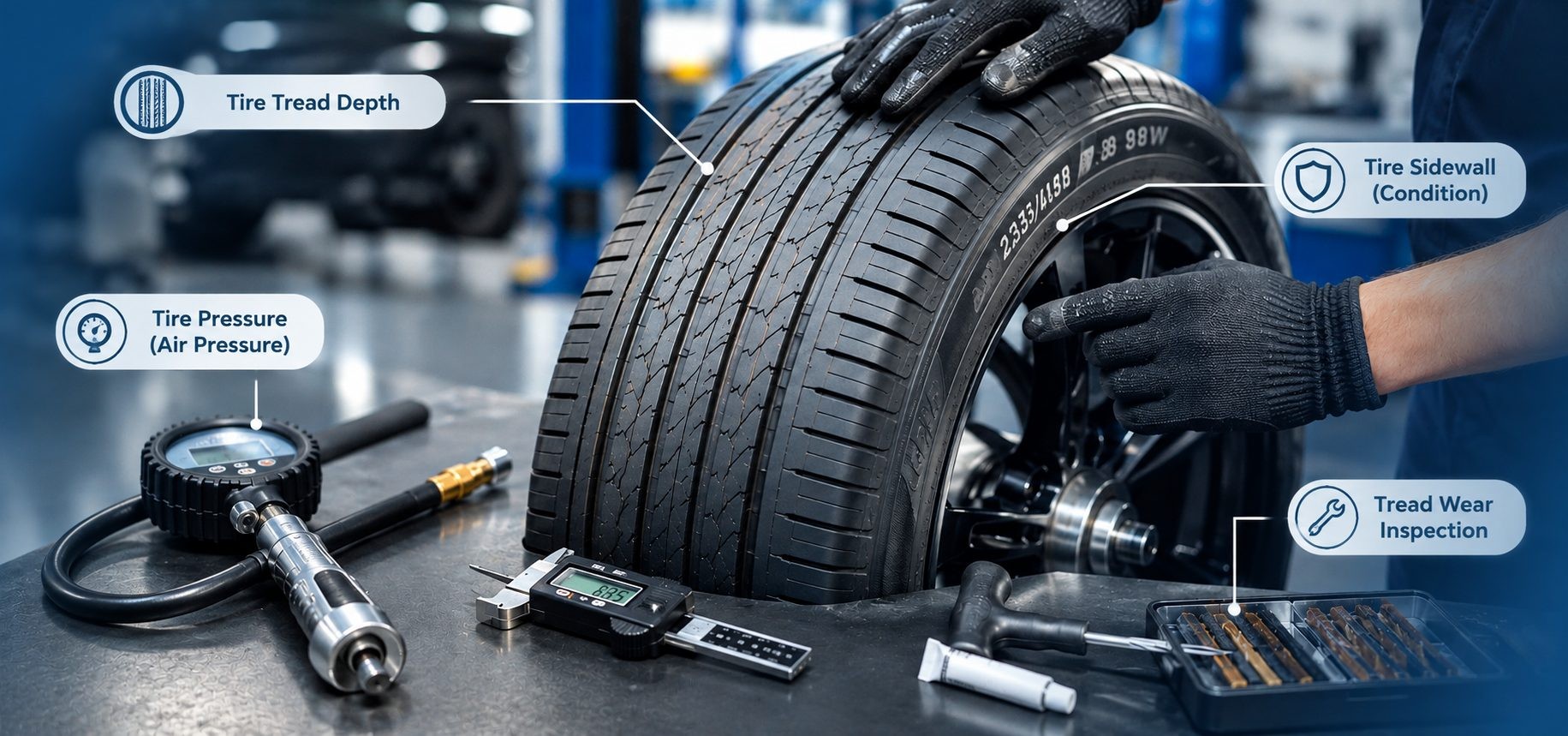
Essential Driver Pre-Trip Checklist
- Check Spare Tyre Condition: Ensure the trunk spare is properly pressurized and free from oxidation cracking.
- Never Trust Visual Impressions: Radial tyres can lose up to 20% of their operational pressure before showing visual sagging.
- Keep Valve Dust Caps Secured: Protective caps seal out road grime, moisture, and grit that cause slow valve core leaks.
Ready for a Comprehensive Tyre Health & Pressure Inspection?
Visit our technical service workshop today for digital pressure calibration, tread depth profiling, and DOT safety verification.