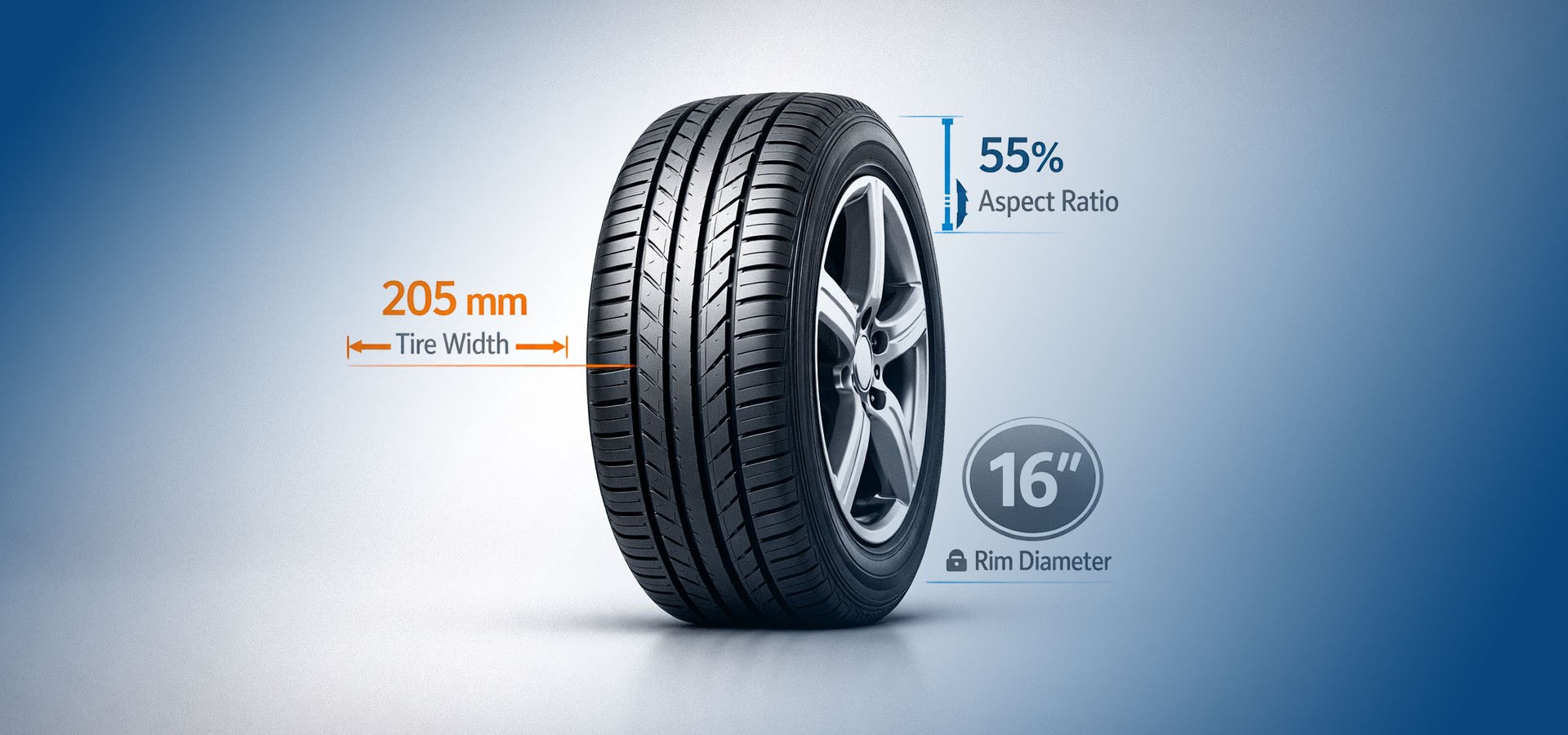
Tyre Size Guide: What Does 205/55R16 Mean?
That “205/55R16” line on your tyre isn’t just a label. It’s a specification that affects how your car sits on the road, how it absorbs bumps, how it responds in corners, and even how accurate the speedometer reads. Below is a simple breakdown, plus safe rules for changing sizes without surprises.
205/55R16—breakdown in plain words
| Part | What it means | In 205/55R16 |
|---|---|---|
| 205 | Tyre width (section width) in millimetres | 205 mm |
| 55 | Aspect ratio (sidewall height as a % of width) | 55% of 205 |
| R | Radial construction (most common today) | Radial |
| 16 | Rim diameter in inches | 16 inch |
Why these numbers matter on real roads
- Width (205): can influence dry grip and stability, but very wide tyres may increase noise and rolling resistance.
- Aspect ratio (55): higher ratios usually feel more comfortable; lower ratios feel sharper but firmer.
- Rim size (16): determines which wheel fits—this must match your rim exactly.
A “better” size is not universal. The right size is the one that matches your vehicle’s recommendations and your route conditions.
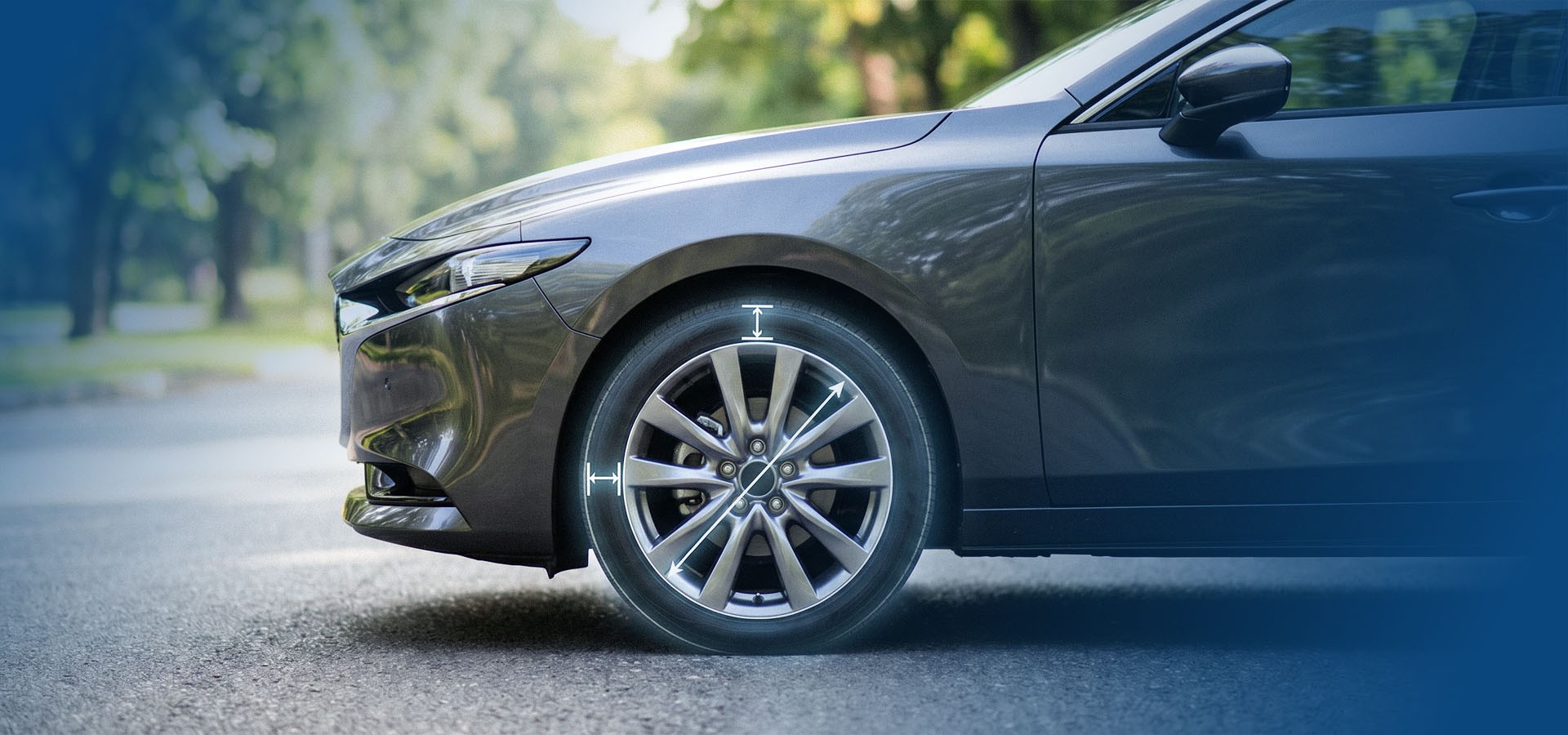
Where to find the size on the tyre
Don’t ignore Load Index and Speed Rating
Next to the size you’ll often see a number and a letter (example: 95H). The number is the Load Index and the letter is the Speed Rating. Even if the size looks right, using a lower load or speed rating than required can reduce safety and shorten tyre life.
Always follow the driver-door placard or owner’s manual for the correct load and speed requirements.
Can you change tyre size safely?
Yes—if you keep the overall diameter close to stock and respect rim width, load index and speed rating. When people “upsize” wheels, they typically reduce the aspect ratio to keep diameter similar.
- Bigger wheel + lower sidewall: sharper response, less comfort.
- Wider tyre: may improve dry grip, but can increase noise and water-planing risk if drainage isn’t suitable.
- Wrong diameter: can cause speedometer error and potential rubbing.
Quick checklist before buying
- Confirm your OE size from the driver-door sticker or your current tyre.
- Match rim diameter exactly (e.g., 16 inch).
- Keep Load Index and Speed Rating at or above the required spec.
- Check tyre condition and manufacturing date before purchase.
Need help choosing the right size?
Send your vehicle model (or a photo of your current sidewall markings) and we’ll recommend the safest match for your routes and driving style.